


OUR NEW 2026 FURNITURE CATALOGUE
Is now available Click Image
Home » Office Chair Brands » Herman Miller »
Herman Miller, a globally recognised name in modern furniture design, has a rich and transformative history rooted in early 20th-century America. Founded in 1905 as the Star Furniture Company in Zeeland, Michigan, it evolved from a maker of traditional furniture into a pioneer of innovative, functional design. With a commitment to quality and collaboration, the company helped shape the landscape of modernist interiors worldwide.

The origins of Herman Miller trace back to 1905, when it was established in Zeeland, Michigan, under the name Star Furniture Company, specialising in the production of intricately detailed, traditional bedroom suites. Four years later, in 1909, it was rebranded as the Michigan Star Furniture Company. That same year, 18‑year‑old Dirk Jan (D. J.) De Pree joined the firm as a junior clerk, embarking on what would become a distinguished career.

A decade on, in 1919, De Pree had risen through the ranks to become president of the company. By 1923, he persuaded his father‑in‑law, Herman Miller (originally Harm Mulder, born 7 September 1867 in Hoogemeeden, Groningen, Netherlands), to lend him the resources needed for a controlling share acquisition. Together, they purchased the majority stake—roughly 51%—in the enterprise. In honour of Miller’s significant investment and leadership support (though he did not participate in daily operations), De Pree renamed the business the Herman Miller Furniture Company.

Previously the company’s output had been largely focused on reproducing classical, ornate furniture styles—a direction typical of West Michigan manufacturers at the time, and often criticised for merely imitating historical designs. It wasn’t until the arrival of modernist industrial designer Gilbert Rohde in the early 1930s that Herman Miller began to pivot towards ground breaking, functionally driven design—marking the start of its enduring legacy in modern furniture.
By the mid-20th century, Herman Miller had firmly established itself as a symbol of modern furniture design. This transformation began with the appointment of designer Gilbert Rohde, but it didn’t stop there. Around fifteen years later, George Nelson was brought on board, significantly influencing the company’s creative direction. With De Pree’s backing, Nelson invited influential contemporaries—including Charles and Ray Eames, Alexander Girard, and Isamu Noguchi—whose innovative contributions would result in some of the most iconic designs of the modern era.
By the mid-1980’s Bill Stumpf and Don Chadwick became the latest designers to join this impressive list. It was no mean feat living up to the legacy of those who had come before them, but they exceeded all expectations with the release of the Aeron Office Chair in 1994, which went on to become Herman Miller’s best selling product.

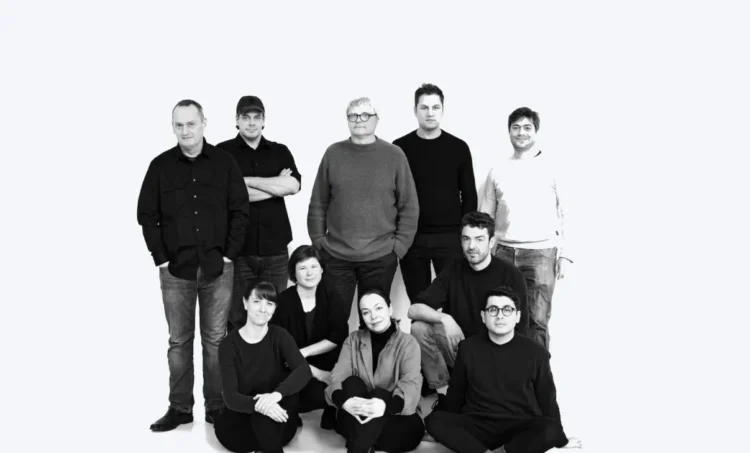
The company never stops innovating and continues to build partnerships with world renowned designers. Berlin’s Studio 7.5 (headed by Burkhard Schmitz, Carola Zwick, and Roland Zwick), is responsible for the Setu, Mirra 2, Cosm and Zeph – all designed as practical solutions to support the way the human body moves whilst at work.

No history lesson about Herman Miller would be complete without some explanation of Swiss furniture company Vitra’s involvement.
Vitra and Herman Miller share a longstanding history of collaboration, particularly centred around the celebrated designs of Charles and Ray Eames, George Nelson, and Isamu Noguchi. In the early stages of their relationship (1950s), Vitra operated as Herman Miller’s licensee across continental Europe. This cooperation later evolved into a joint venture known as Herman Miller AG, aimed at advancing their mutual design interests. Although the partnership came to an end in 1984, Vitra retained the rights to distribute the works of these iconic designers throughout Europe and the Middle East. Meanwhile, Herman Miller kept the global rights outside these regions, along with exclusive ownership of the Herman Miller brand.
This is why to this day you’ll see the ranges created by these Herman Miller designers, rebranded in the UK as Vitra Eames Chairs, Vitra Nelson Clocks and Vitra Akari Lamps.
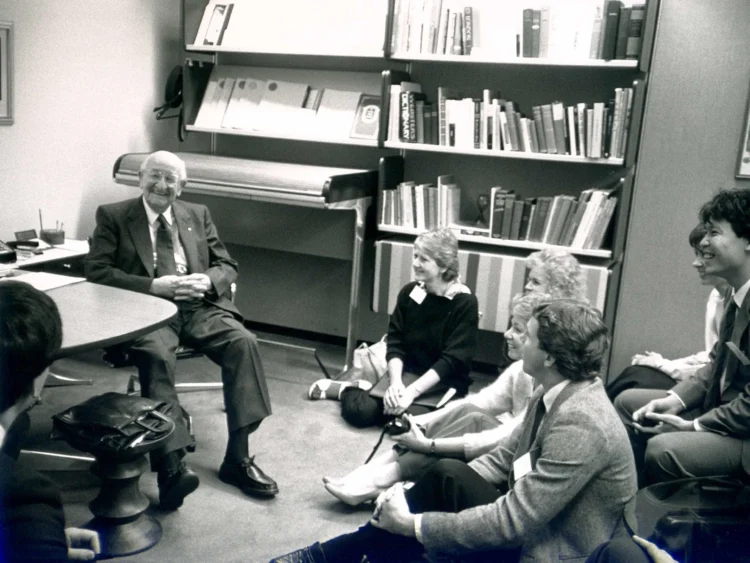
Pictured here are Charles & Ray Eames meeting Vitra’s founders Willi and Erika Fehlbaum, in 1957.
As an official supplier of Herman Miller in the UK, we proudly stock many of their ranges, under both the Herman Miller and Vitra brands. Get started with these collections below:
Who was Herman Miller and how did the company get its name?
Herman Miller was a successful Michigan businessman who helped finance his son-in-law, D.J. De Pree, to purchase a majority stake in the Michigan Star Furniture Company in 1923. Although Herman Miller was the primary investor, he never actually worked for the company or participated in its daily operations. D.J. De Pree renamed the business the Herman Miller Furniture Company as a gesture of gratitude and respect toward his father-in-law.
When was Herman Miller founded and how did it start?
The roots of Herman Miller date back to 1905, when it was originally founded as the Star Furniture Company in Zeeland, Michigan. In its earliest years, the company specialized exclusively in manufacturing highly detailed, traditional, and ornate wooden bedroom furniture suites. It wasn’t until the 1930s that the company transitioned away from historical reproductions to become a pioneer of industrial modernist design.
Who are the most famous designers associated with Herman Miller’s history?
Throughout the 20th century, Herman Miller partnered with legendary designers who shaped mid-century modern aesthetics and ergonomic engineering. Key historic figures include:
Gilbert Rohde: The designer who initially steered the company away from traditional furniture toward modernism in the 1930s.
George Nelson: Appointed as the first design director, he brought in seminal talents and designed iconic mid-century pieces.
Charles and Ray Eames: Renowned for their groundbreaking molded plywood, fiberglass, and lounge chairs.
Alexander Girard & Isamu Noguchi: Masters of textile design and sculptural furniture, respectively.
Bill Stumpf & Don Chadwick: The revolutionary duo who co-designed the world-famous Aeron Chair in 1994.
What is the history and connection between Herman Miller and Vitra?
In the 1950s, the Swiss furniture company Vitra became Herman Miller’s official licensee in continental Europe. This partnership deepened into a joint venture known as Herman Miller AG. When the formal partnership dissolved in 1984, an agreement was reached allowing Vitra to retain the exclusive production and distribution rights for historic mid-century designs (by the Eameses, George Nelson, and Isamu Noguchi) across Europe and the Middle East. Meanwhile, Herman Miller maintained global rights elsewhere, which is why classic Eames furniture is sold under the Vitra brand name in the UK today.
When did Herman Miller transition into making ergonomic office chairs?
While Herman Miller produced innovative office systems (such as the Action Office system in the 1960s), its major pivot into specialized, high-performance ergonomic seating accelerated in the late 20th century. The defining moment in this transition occurred in 1994 with the release of the Aeron Chair, designed by Bill Stumpf and Don Chadwick. Rejecting traditional foam and leather upholstery in favor of a breathable mesh suspension, the Aeron revolutionized workplace health and became the company’s bestselling product of all time.
What is the MillerKnoll collective and when was it formed?
The MillerKnoll collective was formed in 2021 when Herman Miller officially acquired its chief historic competitor, Knoll, in a landmark merger. This union brought together two of the world’s most influential modern design brands under one collective banner. Today, MillerKnoll operates as a powerful global platform of design brands, continuing the historic legacy of innovation, workplace ergonomics, and mid-century modern design heritage established over the last century.
10% Off is back Till Friday
Code LIM10
FREE DELIVERY/FREE RETURNS
No hidden charges
